Tyrimai
Stereotypes and prejudices among students from India


━━━━━━━━━━
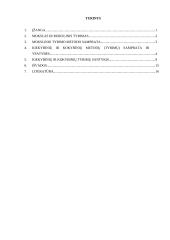
Table of Contents
━━━━━━━━━_
1. INTRODUCTION 3
2. PROBLEM DEFINITION 3
3. Theoretical framework 4
3.1 STEREOTYPES…………………………………………………...4
3.2 PREJUDICES……………………………………………………...6
4. METHOD 8
5. RESULTS 9
6. ANALYSIS 11
7. CONCLUSION……………………………………………………...13
8. Reference 14
9. APPENDIX…………………………………………………………..15
1. Introduction
Every living creature that is able to speak, think, communicate, talk, breath, laugh, love, cry, and utilize opposable thumbs is considered human. We have been living on this planet for countless generations – sometimes in harmony, other times in disagreement. We come from all walks of life, but no matter what race, culture, country, educational background, or socioeconomic background we come from, no human being is inherently better than another. We all have something to offer each other in some form or fashion that can enrich another person’s life.
Cross-cultural learning is a lifelong process, particularly for those living and studying abroad. In daily contact with other cultures we have the opportunity to continually increase our knowledge of our own cultural programming and other cultures. However, faced with a complex environment when living and studying abroad there is also a natural propensity to develop stereotypes. The stress and insecurity of overseas living may lead to the development of prejudices.
Students coming to study from other countries and cultures often face special challenges. Challenges may include, for example: adjusting to a new academic and social environment, culture-shock or language-barriers finding companions of one's own religion, language, or culture, homesickness, encounters with prejudice or other difficulties in fully engaging in university life.
Nowadays many students already have opinions about students from other countries. Usually these opinions may be valid or completely inappropriate. The main reason for conflict between cultures in an educational setting is ignorance on the part of the students who do not understand the other’s culture. That is why stereotypes and prejudices come from not understanding the differences between people and cultures.
2. Problem definition
By discussing different cultures, between India and...
Šį darbą sudaro 4124 žodžiai, tikrai rasi tai, ko ieškai!
★ Klientai rekomenduoja
Šį rašto darbą rekomenduoja mūsų klientai. Ką tai reiškia?
Mūsų svetainėje pateikiama dešimtys tūkstančių skirtingų rašto darbų, kuriuos įkėlė daugybė moksleivių ir studentų su skirtingais gabumais. Būtent šis rašto darbas yra patikrintas specialistų ir rekomenduojamas kitų klientų, kurie po atsisiuntimo įvertino šį mokslo darbą teigiamai. Todėl galite būti tikri, kad šis pasirinkimas geriausias!
Norint atsisiųsti šį darbą spausk ☞ Peržiūrėti darbą mygtuką!
- Sociologijos tyrimas
- 15 psl., (4124 ž.)
- Word failas 91 KB
- ✅ Yra šaltiniai
 Atsisiųsti šį tyrimą
Mūsų mokslo darbų bazėje yra daugybė įvairių mokslo darbų, todėl tikrai atrasi sau tinkamą!
 Panašūs darbai

Kiti darbai



Privalumai
 Darbo pakeitimo garantija
Atsisiuntei rašto darbą ir neradai jame reikalingos informacijos? Pakeisime jį kitu nemokamai.
 Gauk 25% nuolaidą
Pirkdamas daugiau nei vieną darbą, nuo sekančių darbų gausi 25% nuolaidą.
 Greitas aptarnavimas
Išsirink norimus rašto darbus ir gauk juos akimirksniu po sėkmingo apmokėjimo!
Atsiliepimai