Referatai
Language and Gender


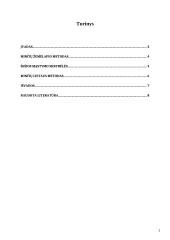
1. Introduction .............................................................................................................................3
2. Verbal communication ............................................................................................................4
2.1. Vocabulary........................................................................................................................4
2.1.1. Standard and non-standard forms...........................................................................4
2.1.2. Colour terms...........................................................................................................4
2.1.3. Sexual terms ...........................................................................................................4
2.2. Questioning.......................................................................................................................5
2.3. Interruptions......................................................................................................................5
3. Non-verbal communication .....................................................................................................7
3.1. Eye contact........................................................................................................................7
3.2. Facial expression ..............................................................................................................7
4. Politeness and profanity ..........................................................................................................9
5. Sexism in language................................................................................................................10
5.1. Sexist forms ....................................................................................................................10
5.2. Elimination of sexist language........................................................................................10
6. Conclusions ...........................................................................................................................12
7. Bibliography ..........................................................................................................................13
2
1. Introduction
Language and gender is a relatively young subject of linguistic studies. The earliest
systematic studies were in the late 1950s and early 1960s but the subject was not seriously
taken into consideration and was paid little attention to. However, partly because of the
women’s movement in the USA, language and gender has developed rapidly as a field. This
linguistic field has been extensively studied in recent years because the knowledge of
communication between women and men has a great importance for linguistic studies
(Bloomer et al 2003).
The main question of this research paper is in what ways males and females
communicate differently; i.e., their vocabulary choice, politeness and profanity, verbal and
non-verbal communication etc. McMillan (1972) discovered that women use two times more
tag questions than men. In addition, Lakoff stated that women’s language is regarded as proper
and polite whereas men are rude and aggressive. However, the earliest language and gender
studies were biased and, therefore, not in-depth (Bloomer et al 2003). For example, Lakoff
“based her claims on impressions and personal observations rather than on empirical study”
(Parker and Riley 1994).
This paper aims at analysing language differences and similarities between men and
women. The research covers the following areas: verbal and non-verbal communication,
politeness and profanity, sexist language. The paper will also review reasons for gender
differences in interaction.
The plan of this paper is as follows. Section two describes disparities in verbal
communication between women and men, particularly different vocabulary choice of the two
sexes, questioning and interruptions. Section three focuses on non-verbal communication. It
discusses eye contact and facial expression. Section four looks into politeness and profanity in
the language of women and...
Šį darbą sudaro 3112 žodžiai, tikrai rasi tai, ko ieškai!
★ Klientai rekomenduoja
Šį rašto darbą rekomenduoja mūsų klientai. Ką tai reiškia?
Mūsų svetainėje pateikiama dešimtys tūkstančių skirtingų rašto darbų, kuriuos įkėlė daugybė moksleivių ir studentų su skirtingais gabumais. Būtent šis rašto darbas yra patikrintas specialistų ir rekomenduojamas kitų klientų, kurie po atsisiuntimo įvertino šį mokslo darbą teigiamai. Todėl galite būti tikri, kad šis pasirinkimas geriausias!
Norint atsisiųsti šį darbą spausk ☞ Peržiūrėti darbą mygtuką!
- Socialinės psichologijos referatas
- 13 psl., (3112 ž.)
- PDF dokumentas 149 KB
- Lygis: Universitetinis
 Atsisiųsti šį referatą
Mūsų mokslo darbų bazėje yra daugybė įvairių mokslo darbų, todėl tikrai atrasi sau tinkamą!
 Kiti darbai



Privalumai
 Darbo pakeitimo garantija
Atsisiuntei rašto darbą ir neradai jame reikalingos informacijos? Pakeisime jį kitu nemokamai.
 Gauk 25% nuolaidą
Pirkdamas daugiau nei vieną darbą, nuo sekančių darbų gausi 25% nuolaidą.
 Greitas aptarnavimas
Išsirink norimus rašto darbus ir gauk juos akimirksniu po sėkmingo apmokėjimo!
Atsiliepimai