Kursiniai darbai
Consumer demographic and psychographic characteristics influencing intention to buy private labels


INTRODUCTION These days knowledge and relativeness plays crucial role in business. Knowledge in business is known as intellectual asset and contains of experiences from the past plus information that are known and are used to create performance models, that helps company to have comparative advantage. Proper adoption of knowledge and theories about customer that were developed a long time ago can lead to better performance and victory against it’s rivals. (Stewart, 1998) In addition, relativeness to customer needs are crucial for companies to survive. That’s why retailers and wholesalers create their own brand - “private labels” to meet them. One of crucial factor for which knowledge is needed are proper marketing strategies. It is impossible to develop one without accurate and relevant information about customers and factors that influence their intention to buy a product. Most popular is demographical type of information about customer. Nowadays it is most reachable information and as a result businesses has to go deeper in customers minds and features to see their psychographics attributes in order to distinguish from it’s competitors by having more valuable information. Theories about customer intention to buy helps to have deeper understanding about their decision to purchase. In accordance Chiagourus research (1991) showed that marketing strategy is more effective then it is related to customer’s lifestyles attributes. Good combination of relative information and knowledge from theories leads company to success. When businesses has ability to reach customers by appropriate marketing strategy and have knowledge about factors influencing consumers intention to purchase a product, retailers and wholesalers are on the right way to develop suitable understanding about what customer wants. Best way is to create private labels, just to ensure customers utility. By using knowledge developed from theories, relative information about customers retailers and wholesalers can create, develop, manage and control it’s private labels to reach company’s goals and customers needs. (Vyncke, 2002) FIn generalization, what is the main factors of customer characteristics that has impact on intention decision to buy a private labels? Problem. What is the main psychographic and demographic characteristics of customer that has impact on intention to buy a private labels? Object. Private labels, intention to buy them Goal. The goal is to analyse demographic and psychographic characteristics of customer to buy private labels. Objectives 1. Analyse and understand what is private label, it’s role and benefits for customer, producer, retailer or wholesaler. Research and distribute main private label brands in Lithuania into three main groups: cheap, moderate and expensive (ecological). 2. Analyse intention to buy private labels and customer demographic and psychographic factors. Structure of the paper. At the beginning should be understood what is private label brand and it’s benefits for all parties. Then the main Lithuanian private label brands should be distributed into specific groups of products: • cheep, • moderate, • exclusive(ecological)) Secondly, all factors and theories that has influence on consumer’s decision making should be analysed and understood. Finally, identify demographic and psychographic characteristics and intention to buy private label brands. 1.CONCEPT OF PRIVATE LABEL Labels have many uses, including providing information on a product's origin, manufacturer (e.g., brand name), use, shelf-life and disposal, some or all of which may be governed by legislation Wholesalers and retailers has various types of goods. Items can be classified into three main categories: store, manufacturer’s and finally private label brands. (Dawson, 2006) Private label brands are crucial for sellers to satisfy customer’s needs and accomplish retailers role. 1.1 Private label Private label (store brand): In short, according to Michael R. Hyman (2008) private label “are brands owned by a retailer or wholesaler”. Store brands are one of retailers and wholesalers strategies to reach profitability goals and keep place in market share. As they create and control private label, which is entirely possible just in their own stores, ensure that bargaining power grows together with loyalty to their shop as customers has positive attitude to inside brands production.(Housen, 2003) Also, private labels could be solution and option to retailers and wholesalers to accomplish full set of products if such is impossible without own brands. That leads to customers satisfaction as he/she has full possibility to fulfill all needs. “Satisfaction is based on fulfilling the expected” (Berman, B. 2005) Although it is natural for consumers to look at a label and perceive different judgments about the products image, price, value, quality and other things, there has been little empirical work in the literature that actually shows how consumers perceive the positioning of international labels in foreign markets (Ghose and Lowengart, 2016). However, many academic researches agree that trust can be established for labels based on that individual’s perception. Aaker and Biel, (2016) explain that the perception of the labels image is very important, since consumers analyze the attitude (personality) of a label, then creates meaning out of the labels message. Furthermore, Upshaw (2016) adds that consumers also perceive labels based on who they are as individuals as well as the environment that they have been exposed to. Therefore, the labels true identity is based strongly on the consumer’s perception, which may be entirely different from what marketers have created for the label. First, more than one label can simultaneously apply to a single reference group. For example, we would certainly expect that many of our membership reference groups will also be primary reference groups. According to Upshaw (2016) labels are packages of trust and performance which is strongly based on the consumer’s perceived value of the label. On the other hand, in order to perceive quality of the label consumers often look at price. Usunier (2016) explains that in general consumers want labels that offer them high quality at a reasonable price. Moreover, a company’s method of sales promotion can have either a positive or a negative influence on the consumer’s perception of the label’s quality, and therefore, have an impact on the label images. For example, a company that always has price promotions can allow a consumer to perceive that the product is of low quality. Conversely, if consumers see special offers from a label once in a while, they will feel more rewarded for being a customer. Furthermore, by advertising this way, the company can maintain the consumer’s perception of quality that they have for the label, while also maintaining a positive image of the label in the consumers mind (Aaker and Biel, 2016). It is important that a labels identity matches the consumer’s image of the label because this determines whether a label will gain the trust of consumers, and whether the label will successful or not. However, companies do not put enough time or effort in making sure that their desired consumer perception matches the actual consumer’s perception. Unfortunately, this means that there is no harmony between the band identity and the image and this is an important factor that is necessary for building trust in a relationship between the consumer and the label (Temporal and Lee, 2016). Petromilli and Morrison, (2002) explains that customers develop relationships with labels through direct experiences and then base their perception of the label on this experience and how that label compares to other labels they have experienced. The personal experience in which a consumer has with a company is the main factor in developing or destroying trust. According to Dolliver (2016) 76 percent of consumers would find it difficult to trust a label again the first time didn’t work, or meet their needs. Since a company’s label is a promise of a certain experience, the trust or distrust of a label depends upon the experience the consumer has. This is imperative because it is through the experience customers will decide whether or not the label is valuable to them and worth trusting (Temporal, Lee, 2016). In general, consumers believe that companies have good intentions and work hard not to repeat mistakes, and believe that most companies will do the right thing when faced with a serious problem with one of their products. Still, the fact remains true that consumers find it more difficult to trust labels after the first time of having a bad experience with the label (Dolliver, 2016). Customer relationships are longer with a company, when customers gain high levels of cumulated satisfaction for a label. On the other hand, if a customer has a poor or failed experience with the product, they will be less satisfied and will not seek a long relationship with a particular label. When a consumer is satisfied with a label this means that they are content with all aspects of the product which are relevant to their needs and therefore gains trust for the label (Buttle and Burton 2002). Customers expect to be recovered in ways that match the failure that they experienced with a product or service; both in the value and the form of recovery. Therefore, if a company rightfully deals with complaint handling they have an opportunity to obtain customer loyalty (not loosing trust with consumers). In a report by KPMG, they show that 82 percent of customers whose problems are solved buy again. Furthermore, PA Consulting observed in their study that if solving problems effectively, 80 percent of customers will stay, and by solving problems fast and effectively, 95% will stay and sometimes becoming more loyal (Buttle and Burton, 2002). 1.2 Private label’s role and benefits to all parties Now, more than ever, it is important for companies to make sure that their labels deliver its promises to consumers and meet or exceed their expectations. This is because consumers have more availability of knowledge through consumer magazines, television shows, and newspaper articles, which keeps them updated on products and services which fail at keeping their promises (Upshaw, 2016). Therefore, it is necessary for label managers to define an experience that the customer values, deliver that experience in everything they do, and deliver that experience consistently. Throughout these tasks customers develop trust for a label. Since a labels promise gets tested with each consumer’s encounter, if the labels execution does not meet or exceed its promise, then the consumer will be dissatisfied with the product and not develop trust. (Rush, 2002) According to Lindstrom (2016) consistency means that every part of the labels message (values, design elements, quality, value etc...), should be delivered to its targeted consumers so that the label is easily recognizable. Furthermore, Elliott and Kritsadarat, (1998) argue that in order for labels to develop trust with consumers, they need to consistently deliver benefits, that coincide with the changing experiences in the target consumer’s life over time. They believe that it is through this consistency; consumers will first, develop predictability second, dependability and lastly, trust for the label. In addition Temporal and Lee, (2016) claim that since labeling greatly depends on trust, and people naturally distrust change, it becomes even more important for companies to make sure that their labels are consistent in what they are delivering to the consumer. They also point out that this becomes increasingly difficult in highly innovative markets where technology is linked to constant change. Uttley (2002) argues that in order for labels to get across their desired impact, it is necessary that they are communicated consistently, regardless of where the label is being marketed. It is important that companies make certain that the values in which they communicate to consumers are consistent with its internal values (Khermouch et al, 2016). Omelia, (2016) claims that the although the communication of the label can differ from market to market in order to be responsive to consumer local needs and wants, it is still essential that advertising in each country expresses a consistent point of view about the product. However, differences between markets can create inconsistency and confusion in particular markets by overlapping media. For example, Lithuanian consumers that have access to satellite channels can receive German and Danish television, and Lithuanians are subjected to a great portion of American television. This kind of media leakage can allow them to get confused about the image of a label if label images differ in these countries (Usunier, 2016). Buttle and Burton (2002) stress the importance and connection of consistency to international companies. They claim that the reality is that companies are having difficulties in achieving consistency, even where relationships with customers have been successfully developed. Therefore, they express that it is imperative for international companies to offer labels to foreign consumers that consistently satisfy their needs and wants. Summing up, a label that is consistent is a label that consumers can trust. Furthermore, a company that is consistent over time and has gained trust with their consumers across borders creates what is considered as a ‘hallmark’ (successful) label. This implies that the label has greatly gained the trust and acceptance of a broad consumer audience which usually means that they have gained an international status (Fletcher, 2002). Vahie and Pashaw (2006) in their findings found that perceived store quality and atmosphere positively correlates with image of private labels brand’s quality. That means private liabilities have direct impact on store image and brand. Own brands are one of crucial facts, that should be understand by wholesalers and retailers. Also, greater private label share boosts profits as increases share of wallet (Ailawadi 2008). 1.3 Private labels grouping and distribution According to Salaun and Flores (2016) there is an increasing lack of trust and consumer loyalty when it comes to labels, due to the explosion of products on the market place. They claim that information is the key factor that trust is based on. Furthermore, they express that consumers are increasingly looking for information about the conditions (ex: environmental) in which the product was manufactured, because they are concerned for their health and safety. Therefore, they conclude that when consumers receive reliable information they are more likely to trust the label as well as the company, which results in customer loyalty. Buttle and Burton (2002) agree and argue that biotechnology and food safety, are two industries that have been particularly placing more weight on creating trust with their customers. They believe that increasing transparency of information about how food is produced, by including all contents within the product, can allow consumers to trust the labels in that they consume. Psychographic factors are another area for differences. Shama (1981) found that economic downturns influenced consumers’ motives, attitudes and consumption behaviour in ways that separated them into two distinct groups. Zurawicki and Braidot (2005) also suggest that changes in attitudes towards certain products or product categories during a recession can create different groupings of consumers. Donthu and Gilliland, (1996) suggest that consumers can be separated based on their positive or negative attitude towards shopping, and that this factor contributes significantly towards predicting their behaviour. Thus it can be inferred that consumers’ attitudes towards shopping may change during a recession in ways that may separate the two behavioural groups. Given that attitudes have a positive relationship to consumption behaviour (Allport, 1935), the following hypothesis is proposed: H2: Attitudes towards shopping will have a significant positive influence on the decision not to alter shopping behaviour during a recession. Also, given such an economic climate, it makes logical sense that people are more cost conscious. Ailawadi, Neslin and Gedenk (2016) found that price consciousness is positively related to consumers’ decisions to purchase store brands rather than national brands. Industry reports and research evidence, (e.g. Zurawicki and Braidot 2005) discussed earlier suggest that this consumer behaviour holds true in a recession. On the other hand Weeks (2004) found that when considering economic hardship, participants in her study reported they would be less likely to reduce spending on categories such as clothes as they believed they were already using value retailers. It could be reasonably inferred, however, that price consciousness may also be a point of difference between the two groups. This leads to the following hypothesis: H3: Price consciousness will have a significant positive influence on the decision to alter shopping behaviour during a recession. As noted earlier, not every consumer is affected by a recession. To some extent, this may be nfluenced by their subjective perceptions of how the downturn is likely to affect them and how they make trade-offs between product categories or price/quality (i.e. Zurawicki and Braidot 2005). In turn, this may impact on whether a rational or emotive decision-making process underpins their change in shopping behaviour (Shiv and Fedorikhin 1999). Research shows that when consumers have access to more processing resources they are more likely to be influenced by cognitions related to the consequences of their decisions, thus their head would rule rather than their heart (Shiv and Fedorikhin 1999). During an economic recession consumers are likely to be subject to and more involved in information on the recession through the media. As higher involvement entails higher cognitive processing (Zaichowsky, 2017) such processing is therefore likely to influence the decision making process. Thus, for those who have altered their shopping behaviour it then makes intuitive sense that cognitive factors may underpin their decision to change. Aaker and Biel (2016), discuss ‘meaning transfer’, which means that it is essential that advertising and other marketing processes used to communicate the label to consumers, should reflect the label’s actual personality (what the label stands for) and true value of the label in order to maintain a positive perception of the labels image. Temporal and Lee (2016) agree, and further argue, that the labels advertising must reflect the personality in order for consumers to trust the label. Therefore, advertisements should represent the target market, by using words that they would use, and models or people that are appropriate to the label’s character. Moreover, Buttle and Burton (2002) claim that the value of label needs to be communicated in an efficient way. Consumers usually do not admit to being influenced by a company’s advertising according to Dolliver (2016). However, from his study, he found that when the quality of the advertising campaign is high, consumers will be more confident in the label, and will trust products more when they have an attractive or appealing packaging. Groups of products (cheap, moderate, exclusive(ecological)): There are three main groups in which private labels can be divided: • Cheap goods. Relatively to small price, quality is only moderate or low. • Moderate goods. Relatively to moderate price, products have average quality. Brand of these goods • Luxurious and ecological goods. Relatively to high quality and ecological or more expensive production and materials prices are higher than in cheap and moderate goods groups. In Lithuania we have four main retailers: “MAXIMA”, “IKI”, “RIMI”, “NORFA”. Their private labels are: • Cheap goods: ◦ “Optima linija” ◦ “Cento” ◦ “RIMI basic” ◦ “N” • Moderate goods: ◦ “Favorit” ◦ “Sodžiaus” ◦ “Gar2” ◦ “Piemenėlio” ◦ “RIMI” ◦ “IKI” ◦ “RIVONA” ◦ “Kolumbo” • Expensive, luxurious and ecological goods: ◦ “Ecologica” ◦ “IKI ūkis”/”IKI derlius”/”IKI mėsa” ◦ “I love eco” ◦ “IKI Gourmet” ◦ “Selection by RIMI” ◦ “Pieno rojus” ◦ “Meistro kokybė” Private label (store brand) Michael R. Hyman, Dennis A. Kopth, Dongdae Lee (2008); Karsten House, Vishal Singh, Pradeep Chintagunta (2003); Berman, B. (2005); A. Vahie, A. Pashaw (2006); Kusum L. Ailawadi, Koen Pauwels, Jan-Benedict E.M. Steenkamp (2008); 2. CUSTOMERS INTENTION TO BUY PRIVATE LABELS Purchase intention variables shows customers psychographic, demographic and other characteristics, which affect intention to buy a product and with this knowledge sellers can evaluate customers willingness to buy and manipulate with price and quality if demand for a good is greater than current price (Dodds, Monroe, Grewal, 1991; Schiffman & Kanuk, 2000). A critical issue in labeling is that a rational appeal has to be balanced with an emotional appeal. The human brain consist of both the rational (left), and the emotional (right) side which both function differently, but make individuals balanced in their personality. According to Temporal and Lee (2016), a label success depends on its appeal to the rational and the emotional side of a consumer’s brain and the two sides must work in harmony and be balanced. Therefore, it makes sense to say that the label personality should also appeal to the left and the right side of the consumer’s brain. By doing so, the label will stimulate and be appealing to the consumer entirely. As a result, the consumer will trust and find the value of the label to be even more attractive, since they can emotionally and rationally connect with the label. For example, Tag Heuer uses rational and emotional appeal to gain trust of consumers. From the rational perspective they project to consumer’s versatility, durability, and sturdiness. On the other hand, we can see that from the emotional perspective they project that their label is fashionable, dynamic, attractiveness, precise, and heroic. 2.1 Theory of information integration De Chernatony (2016) argues that companies strongly need to focus on building the quality of their products and services. Commercials and advertisements should focus more on showing quality in instead of having a lot of information crammed into the commercial space. According to Fletcher (2002) labels that offer their consumers good quality as well as good value, gain their consumers trust and have a long life cycle. Furthermore, the more trusted the label the more of a chance it has to compete in an international market composed of different nationalities. Temporal and Lee (2016) argue that generally, consumers connect or link labels with a certain level of performance and quality standards. By consumers experiencing different labels, they can compare quality standards and gain knowledge in the value that they are getting for their money. The consumer then decides which label they trust to satisfy their expectations. It is very likely that the consumer will trust labels which offer them the highest quality standards. Furthermore, they make clear that it is consumers trust for the label that a company will have to rely on, especially in the crowed markets labels are competing in today. Still, for explanatory purposes, many writers describe the U.S. social class system as a series of points on the continuum that can be labeled as social classes and serve to illustrate the social differences that exist between groups of Americans. We will adopt the most common view of the American social class system, which divides the population into seven social class groups. These social class groupings are shown in Exhibit 4 on the preceding page. At the top of the social class hierarchy is the “upper upper” class, which comprises approximately only about 0.3% of the total population. Individuals in this social class tend to extremely affluent, with most of their wealth inherited. Many carry aristocratic names suggesting “old money.” Just below this group is the “lower upper” class. People belonging to this class also tend to be very wealthy. Indeed, in terms of income or assets, they can be substantially wealthier than the upper uppers, however, but their wealth may be somewhat more recent. Corporate executives and the professional elite in the country frequently belong to this social class. As you might expect, this social class is rather small as well, comprising only 1.2% of the population. class comprises about 12.5% of the population. Fourth is the “middle class,” which males up 32% of the population. The middle class is made up of college educated mid-level managers and other average pay white collar workers. The fifth social class is called the “working class.” People in the working class may hold skilled and semi skilled blue collar jobs. Many in this social class may earn more than those in the middle class but are categorized in the working class because they may lack a college education and because they do not hold white collar jobs. This social class makes up about 38% of the total. Sixth is the “upper lower” class. People in this social class live at or just above the poverty level, may lack a high school diploma, and frequently hold unskilled service sector jobs that pay minimum wage or only slightly better. The upper lower class is about 9% of the population. At the bottom of the U.S. social hierarchy is the “lower lower” class. People in this social class are poverty stricken. They may be unemployed or underemployed and frequently receive some sort of public assistance. They make up about 7% of the population. The third social class from the top is referred to as the “upper middle” class. People in this social class also enjoy affluent lifestyles but tend to lack the overall levels of assets found in the two top social classes. Members of this social class occupy mid to upper managerial positions in the corporate world or may be professionals such as doctors, lawyers, or engineers. This social 2.2 Theory of reasoned action (TRA) Labels trust effectiveness is based on culture responsiveness, since cross-national differences continue to exist. Therefore, it is necessary that advertising content is altered to match cultural attitudes as well as social changes, and should be relevant to what consumer’s value in the label. Although Coca Cola and Nike have been able to use the same label image strategies cross nationally, many international labels have failed because they did not adapt their label image strategies to cultural differences. By international marketers identifying and positioning their labels to their target markets conditions they will be more successful. We can see international companies such as Levis, whose label image in the United States is social and group oriented, while in Europe the image is positioned as sexual and more individualistic. According to Usunier (2016) every country reinvents the original international label image that is positioned to them in order for it to coincide with their own local images. Therefore, national culture will continue to strongly influence the implementation of many aspects of marketing strategies, because cultural differences will never disappear. Thus, marketing strategies tailored to national markets is important. Some argue that culture and nationality can be regarded as the same thing, but sometimes nation-states can be multicultural. For example Switzerland is made up of Germans, French, Italians, and Romanics. Furthermore, if international marketers use stereotypes to market products to consumers, they can lose consumers trust since they would be lacking the important cultural aspects on which to base the labels identity with. Consumers can also be offended by stereotypes, and will not identify nor personally bond with the product, since they feel the identity is not relevant within their life. It is evident that consumer’s trust is highly dependent upon their culture, and their bonds to consumer goods are based on how well the product is adapted to their cultural norms. (Usunier, 2016) 2.3 Theory of planned behavior (TPB) Presently, we are living in a world where consumers are ethnocentric, meaning that they place high value, and favoritism on their country, nationality, and culture. Country culture has just as much impact on consumer’s feelings and beliefs towards a product as the products characteristics and features. In general, consumers from developed countries have a preference for their national products over foreign products. To some this may seem irrational and arrogant to think this way, but Usunier (2016) claims that customers may believe that they are immoral if they buy foreign goods since it could potentially put their national economy at risk and leads to job losses. Furthermore, non-durables (clothing, food or house hold cleaners), appeal more to tastes, habits and customs and therefore, are more culture-bound. A greater trust for domestic labels will therefore be present here. On the other hand, high technology products (computer hardware, machine tools and heavy equipment) are most suitable for global strategies. Theory of planned behavior is development of the previously discussed topic TRA (Azjen & Fishbein, 1980). In addition to TRA, TPB has third component perceived behavioral control. According to Joey (2004) “For TPB, attitude toward the target behavior and subjective norms about engaging in the behavior are thought to influence intention, and TPB includes perceived behavioral control over engaging in the behavior as a factor influencing intention “. According Icek Ajzen (2002) TPB customer’s decision is influenced by three main beliefs: behavioral, normative and control. Human evaluates his positive results of different options to behave (behavior), then overview and satisfy social norms and expectations of others in accordance to his desire to follow them (normative) and finally, judges all environmental factors, that may interfere and has influence on his action or outcomes. Depending on behavioral believes customer perceives positive or negative attitude towards behavior. Meanwhile normative appeal to customers minds and subjective norm. Finally, control beliefs create perceived behavioral control. Keywords Authors Demographic characteristics Patrick Vynke (2002) Psychographic characteristics Mark Cleveland, Nicolas Popodopoulos (2011) Alisa Meredith (2013); Ciribeli, Joao Paulo, Miquelito, Samuel (2014) Intention to buy Tsiotsou (2006); Dodds, Monroe, Grewal, (1991); Schiffman, Kanuk (2000). Joey F. George (2004) 3. CHARACTERISTICS THAT HAS IMPACT TO PURCHASE PRIVATE LABEL There is written a review of literature that is connected to the problem which will be performed. The literature will cover areas linked to trust and labeling to give a general idea of what has been previously studied by other researchers. Also, this part will provide a foundation for the analysis. 3.1 Demographic The number of labels that originate from foreign countries are increasing more and more, especially when considering the foreign labels that compete with domestic labels in North America (ex: the automobile market) (Kim and Chung, 2017). Labels that have been consistently available to consumers for a long period of time give a company in the domestic market more of an opportunity to understand consumer’s needs. Furthermore, labels that are present in the consumer’s life become part of their culture due to the familiarity that the consumer associates with the label. If consumer did not have labels that they recognized and could trust, shopping for almost anything would be confusing and time consuming. Therefore, a strong label that is perceived to be trustworthy has more of an advantage when entering new markets or offering new products, when compared to competitors who have not gained the same level of recognition and trust (Khermouch et al, 2016). Geographic proximity in manufacturing can also allow consumers to psychologically perceive that the foreign label is more familiar and in touch with their needs, and as a result, consumers will have more trust in these labels and prefer to others (Kim and Chung, 2017). Furthermore, the greater the number of committed consumers in the market the more difficult it will be for an international label to be successful in a new market. The uncommitted consumers of existing labels are namely more probable or likely to try new products and will not commit to any label. That could leave the international label with a very small potential market. The majority of new products that fail due to the commitment and trust consumers have to already existing products. Furthermore, it makes no difference to how great the new competing product is; the product is still more likely to fail due to the trust that consumers have with their favorite labels (Dinnie, 2016). Why do consumers care about labels so much? There are many reasons and answers to this question. Peoples (consumers) lives their own lives, their lives has cycles where they go through development changes. There are several important issues to consider when managing a brand. International labels also have to compete with local labels that have some additional advantages such as familiarity and closeness to the consumer. Demographic are variables, such as age, sex, education level, marriage status, income level, age, income, and education, can be used to explain the characteristics of the sub-markets and classify the key factors of a market segment. Traditional demographic variables, however, cannot identify the complete characteristics of the sub- markets because consumers in the same demographic group have very different psychographic makeups Kotler and Armstrong, 1999).Demographic characteristics about customer gives only abstract view about customer and provides only conventional type of classification and way to segment customers. Only demographical information doesn’t show factors that are essential in their decision to purchase making. (Vyncke, 2002). Using the behavioural groupings as the dependent variable, the results show a good fit for the logistic model with the log-likelihood of the initial model (-2LL = 460.05) decreasing with the addition of the predictor variables (-2LL = 398.27). This was confirmed with the fit between the actual model and predicted model, as indicated by the Hosmer and Lemeshow value, having an insignificant Chi-square (x [8 df] = 10.97, sig. = .203). Approximately 23% of the variance in the model may be explained by the predictor variables (Nagelkerke R2 = .23). The results of the analyses are depicted in Table 1. Table 1: Logistic regression results for demographic and psychographic factors Predictors B Sig. Exp[B] Trade education -.873 .012* .418 Tertiary education -.346 .260 .708 Single -.034 .919 .967 Male 1.084 .001** 2.957 Student -.089 .854 .915 Blue collar .264 .603 1.303 White collar .583 .198 1.790 Australian -1.076 .000** 2.933 Low income ( .05). In terms of the two psychographic factors, attitudes towards shopping and head vs. heart were found to both have a significant effect (sig.
Šį darbą sudaro 9186 žodžiai, tikrai rasi tai, ko ieškai!
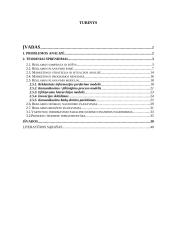
- INTRODUCTION 3
- 1.CONCEPT OF PRIVATE LABEL 4
- 1.1 Private label 4
- 1.2 Private label’s role and benefits to all parties 6
- 1.3 Private labels grouping and distribution 8
- 2. CUSTOMERS INTENTION TO BUY PRIVATE LABELS 11
- 2.1 Theory of information integration 11
- 2.2 Theory of reasoned action (TRA) 14
- 2.3 Theory of planned behavior (TPB) 15
- 3. CHARACTERISTICS THAT HAS IMPACT TO PURCHASE PRIVATE LABEL 16
- 3.1 Demographic 16
- 3.2 Psychographic 20
- CONCLUSIONS AND PROPOSALS 34
- LITERATURE AND REFERENCES 34
- SUMMARY 34
- ANNEXES 36
★ Klientai rekomenduoja
Šį rašto darbą rekomenduoja mūsų klientai. Ką tai reiškia?
Mūsų svetainėje pateikiama dešimtys tūkstančių skirtingų rašto darbų, kuriuos įkėlė daugybė moksleivių ir studentų su skirtingais gabumais. Būtent šis rašto darbas yra patikrintas specialistų ir rekomenduojamas kitų klientų, kurie po atsisiuntimo įvertino šį mokslo darbą teigiamai. Todėl galite būti tikri, kad šis pasirinkimas geriausias!
Norint atsisiųsti šį darbą spausk ☞ Peržiūrėti darbą mygtuką!
- Marketingo kursinis darbas
- 33 psl., (9186 ž.)
- Word failas 259 KB
- Lygis: Universitetinis
 Atsisiųsti šį kursinį darbą
Mūsų mokslo darbų bazėje yra daugybė įvairių mokslo darbų, todėl tikrai atrasi sau tinkamą!
 Panašūs darbai

Kiti darbai




Privalumai
 Darbo pakeitimo garantija
Atsisiuntei rašto darbą ir neradai jame reikalingos informacijos? Pakeisime jį kitu nemokamai.
 Gauk 25% nuolaidą
Pirkdamas daugiau nei vieną darbą, nuo sekančių darbų gausi 25% nuolaidą.
 Greitas aptarnavimas
Išsirink norimus rašto darbus ir gauk juos akimirksniu po sėkmingo apmokėjimo!
Atsiliepimai